
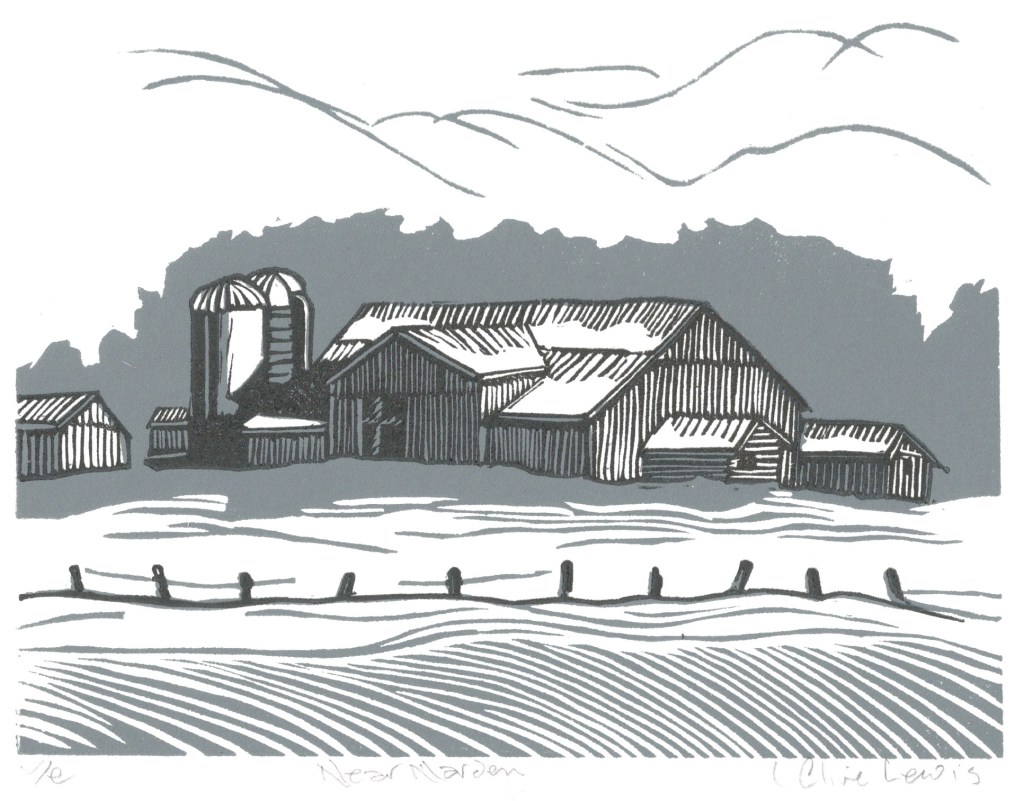
A woman came to me at a show, pointed at this engraving and asked why some barns were painted red. I was a bit embarrassed to admit I didn’t know. The search engine DuckDuckGo was most helpful.
Seems that hundreds of years ago (long, long before Home Depot) many farmers would seal the wood on their barns with linseed oil, an orange-coloured oil derived from the seeds of the flax plant. To this oil, they would add a variety of things, most often milk and lime, but also ferrous oxide, or rust. Rust was plentiful on farms and because it killed fungi and mosses that might grow on barns, it was very effective as a sealant. It turned the mixture red in colour and, Voila! a Red Barn.

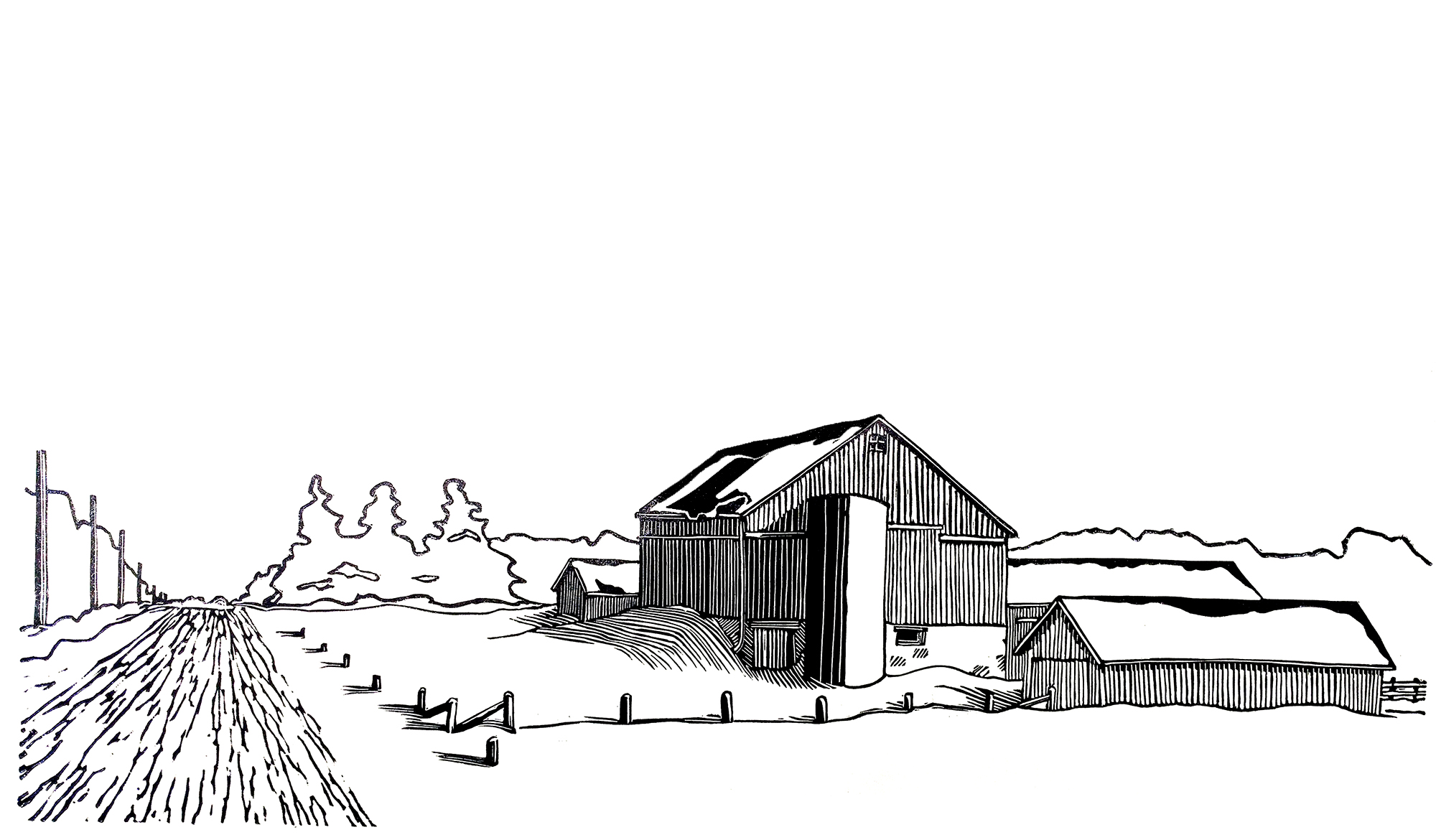 I editioned this years ago but something about it always bugged me so it was relegated to a drawer. Two weeks ago I sliced a lot of roadway from the bottom of the plate and all of a sudden the eye was drawn to the barn, not the road!
 These hay pulleys ran along a track near the peak of the barn roof. The bottom pulley clipped onto a large fork that dropped down and stuck into loose hay on the wagon just in from the field. The rope was attached to a team of horses that would pull the hay up to where it could be dropped into the loft. Hot, dusty, sweaty work.
 This barn, one of Ontario’s ubiquitous bank barns, was in the middle of a field on a sideroad way, way out in the country. It looked quite safe from developers’ bulldozers.
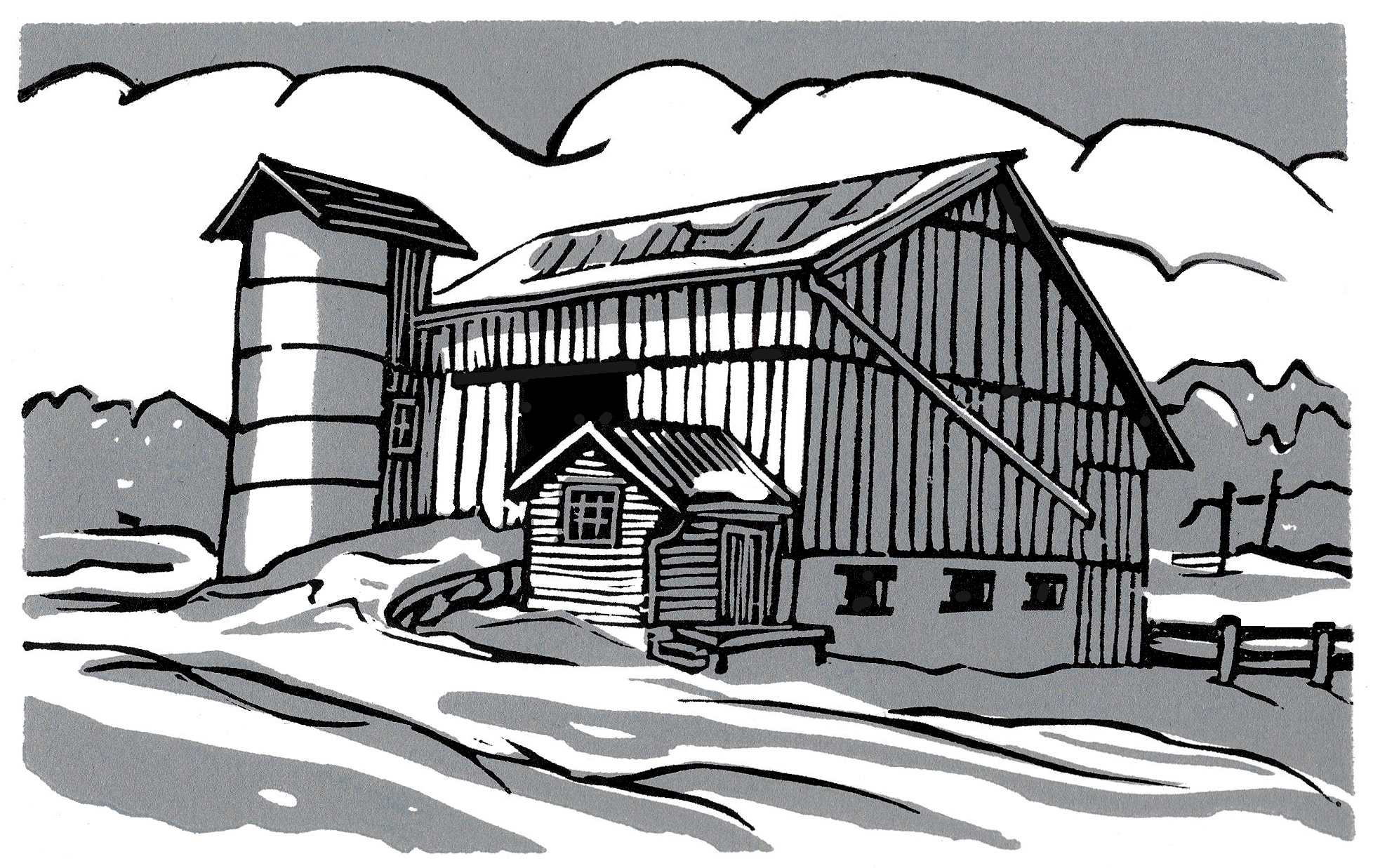 Most printmakers show progressive prints as a sort of educational/interest thing, I’m doing it just to get a bad pun out of my head and into the subject line.
 clive lewis, printmaker